Best Vitamins for Hair Growth
The best vitamins for hair growth are not the ones with the loudest supplement label; they are the nutrients your body actually needs and may not be getting enough of. Hair depends on protein, iron, vitamin D, B vitamins, zinc, essential fatty acids, and overall energy intake, but more is not always better. Supplements help most when they correct a real gap. If nutrient status is already adequate, extra capsules rarely create dramatic growth. A smart hair nutrition plan begins with food patterns, symptoms, testing when appropriate, and realistic expectations.
A: They help most when they correct a real deficiency or dietary gap.
A: Not for everyone. It is useful mainly when biotin status is low.
A: Only with appropriate guidance or testing, because excess iron can be harmful.
A: Hair changes often take months because growth cycles are slow.
A: Low vitamin D may be relevant for some people, but testing helps guide decisions.
A: Protein and overall adequate nutrition are foundational before specialty supplements.
A: They may fill some gaps, but they cannot fix every cause of hair loss.
A: Excess nutrients can cause health problems and sometimes worsen hair concerns.
A: Yes, reliable B12 planning is important for vegan diets.
A: Review diet patterns and consider targeted testing before buying a hair supplement.
Think Nutrients, Not Magic Pills
Hair growth is a biological process that depends on the whole body. Follicles need energy, amino acids, minerals, vitamins, hormones, circulation, and a healthy scalp environment. A single vitamin cannot override chronic stress, under-eating, illness, genetics, or scalp disease. This is why hair supplements often disappoint when they are chosen without a clear reason.
That said, nutrient gaps can matter. Hair may shed when the body is low on key building blocks or under metabolic strain. People with restrictive diets, heavy periods, recent pregnancy, digestive conditions, rapid weight loss, or limited sun exposure may have different needs than someone eating adequately and feeling well. The goal is not to take everything. The goal is to identify what is missing.
Food should remain the foundation. Supplements can be useful tools, but they should not replace regular meals, enough protein, and a balanced pattern of whole foods. Hair responds slowly, so nutrition changes need time. A supplement taken for two weeks cannot fairly be judged as a success or failure.
Protein and Amino Acids
Protein is not a vitamin, but it is central to hair because hair is made largely from keratin. Low protein intake can make it harder for the body to maintain strong growth. This is especially relevant for people who skip meals, follow restrictive diets, recover from illness, or rely heavily on low-protein snacks. Hair may not be the first place deficiency shows, but it can be affected over time.
Good protein sources include eggs, fish, poultry, lean meats, Greek yogurt, cottage cheese, tofu, tempeh, lentils, beans, nuts, seeds, and protein-rich grains. The best choice depends on dietary preference and digestion. Spreading protein across meals may be easier than trying to fix the day at dinner.
Collagen supplements are popular for hair, skin, and nails. They provide amino acids, but they are not a complete magic growth signal. Some people like them as part of a protein strategy, while others can meet needs through food. Collagen should be seen as optional support, not a substitute for a balanced diet.
Iron and Ferritin
Iron is one of the most important nutrients to discuss when hair shedding is persistent, especially for women with heavy periods, low meat intake, pregnancy history, or fatigue. Ferritin, a marker of iron storage, may be considered by clinicians when evaluating hair loss. Low stores can contribute to shedding for some people, but iron should not be supplemented casually.
Too much iron can be harmful, and the right dose depends on labs, health history, and medical guidance. Food sources include red meat, poultry, fish, lentils, beans, spinach, pumpkin seeds, and fortified foods. Plant-based iron is absorbed better when paired with vitamin C-rich foods like citrus, strawberries, peppers, or kiwi.
If iron is low, improvement takes time. Hair shedding may not change immediately because follicles move through cycles slowly. The goal is to correct the underlying status safely and consistently, then watch for gradual changes over months.
Vitamin D
Vitamin D is involved in many body systems, and low levels are common in some groups due to limited sun exposure, darker skin, indoor lifestyles, higher latitudes, covering clothing, or absorption issues. Vitamin D has been studied in relation to hair disorders, but supplementation is most rational when levels are actually low.
Testing can help because needs vary widely. Some people need supplementation, while others do not. Taking high doses without guidance is not wise. Vitamin D is fat-soluble, which means excess can accumulate. A clinician can suggest a dose based on labs and follow-up.
Food sources include fatty fish, fortified dairy or plant milks, egg yolks, and some mushrooms, but many people rely on sunlight or supplements. For hair, vitamin D should be part of a broader health picture rather than a stand-alone cure.
B Vitamins and Biotin
Biotin gets enormous attention in hair marketing, but true biotin deficiency is uncommon. When deficiency exists, correction can help hair and nails, but extra biotin in someone with adequate levels is unlikely to create the dramatic growth promised by many products. High-dose biotin can also interfere with certain lab tests, so clinicians should know if you take it.
Other B vitamins, including B12 and folate, may matter depending on diet and health status. Vegans and some vegetarians need reliable B12 sources. People with absorption concerns may need testing. Again, the point is not to take a mega-dose complex automatically; it is to match intake to need.
Whole foods such as eggs, dairy, fish, meat, legumes, leafy greens, and fortified foods can support B vitamin intake. Supplements may be helpful when diet patterns or labs suggest a gap. The best plan is targeted, not theatrical.
Zinc, Selenium, and Other Minerals
Zinc supports many biological processes, including those related to skin and hair. Low zinc can contribute to hair concerns in some cases, but excess zinc can interfere with copper and create problems. This is a good example of why more is not better. Hair supplements often include zinc, so check totals before stacking products.
Selenium is another mineral that appears in hair supplements, but it has a narrow useful range. Too little and too much can both be problematic. Brazil nuts are a concentrated food source, but eating many daily can overshoot. Mineral support should be moderate unless a clinician directs otherwise.
Omega-3 fatty acids are not vitamins, but they can support overall skin and scalp health as part of an anti-inflammatory eating pattern. Fatty fish, chia, flax, walnuts, and algae-based supplements are common sources. They should be viewed as supportive nutrition, not direct follicle medicine.
When a Hair Supplement Makes Sense
A hair supplement makes the most sense when there is a plausible gap, a tested deficiency, a restricted diet, or a clinician’s recommendation. It may also be reasonable as a short-term bridge during recovery from a known stressor, as long as doses are moderate and the product does not replace meals. The label should show clear amounts, not hide behind a proprietary blend.
Be cautious with supplements that promise rapid regrowth, mega-dose many nutrients, or imply that every person with hair loss is deficient. Hair loss can be genetic, hormonal, inflammatory, medication-related, or mechanical. A supplement cannot solve all of those causes. If a product claims to work for everyone, it is probably oversimplifying.
Also consider cost. Money spent on an unnecessary supplement might be better used for bloodwork, a dermatologist visit, a gentle scalp treatment, or higher-protein groceries. Hair care is emotional, and marketing knows that. Slow down before buying a subscription.
Build a Hair-Supportive Eating Pattern
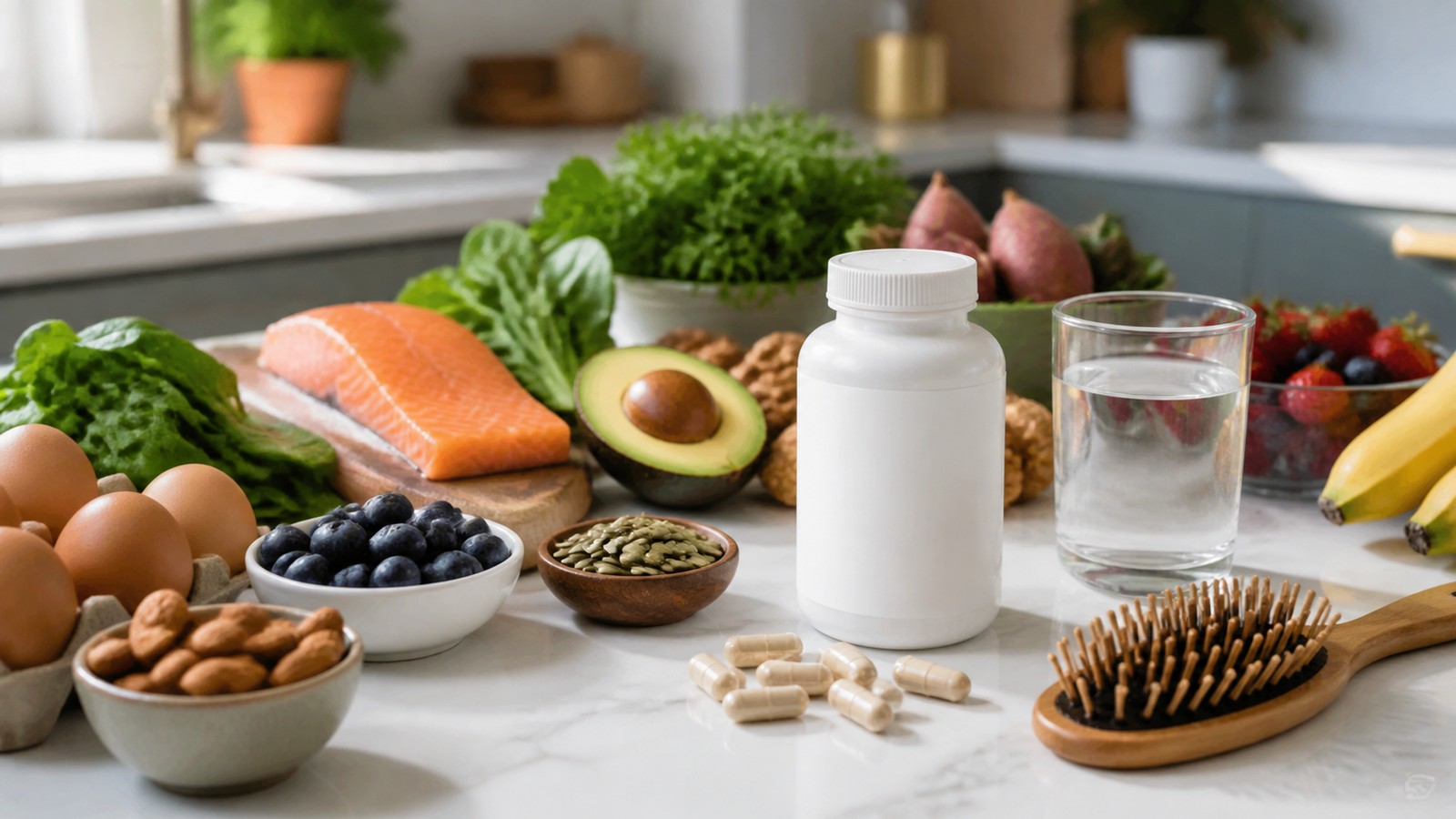
A strong eating pattern includes enough calories, protein at meals, iron-rich foods, colorful produce, healthy fats, and regular hydration. It does not require perfection. Breakfast with Greek yogurt and berries, lunch with lentils and peppers, dinner with salmon and greens, or a plant-based bowl with tofu, pumpkin seeds, and citrus can all support hair nutrition.
Consistency matters more than one superfood. Hair follicles respond to the body’s long-term environment. Repeated under-eating followed by occasional supplement use is less supportive than steady meals. If appetite, dieting, digestion, or disordered eating patterns are involved, compassionate professional support may be part of hair recovery.
The best vitamins for hair growth are best understood as part of a bigger system. Identify gaps, correct them safely, eat enough, protect the scalp, and address medical causes when needed. That approach is less flashy than a hair gummy ad, but it is much more respectful of how hair actually grows.
How to Read a Hair Supplement Label
A hair supplement label should be specific. Look for exact amounts of each nutrient, serving size, and whether the doses are moderate or unusually high. Proprietary blends make it harder to know what you are taking. If the product contains biotin, zinc, selenium, vitamin A, iron, or iodine, pay attention to totals, especially if you also take a multivitamin.
More ingredients do not make a supplement better. A crowded formula may include nutrients you do not need and amounts that complicate lab testing or interact with health conditions. Iron is a clear example: it can be helpful when low and inappropriate when not needed. Vitamin A is another nutrient where excess can be harmful. Beauty branding does not remove basic nutrition rules.
Choose third-party testing when possible and avoid products that promise rapid transformation. Hair grows slowly, and responsible brands should not pretend otherwise. A label that encourages testing, adequate diet, and professional care is more trustworthy than one that suggests every person is one gummy away from thicker hair.
Food Pairings That Support Absorption
Some nutrients work better when paired thoughtfully. Plant-based iron from lentils, beans, spinach, or pumpkin seeds is absorbed better with vitamin C-rich foods like citrus, strawberries, kiwi, or bell peppers. Calcium can interfere with iron absorption for some people when taken at the same time, so iron supplements may be timed separately if a clinician recommends them.
Fat-soluble nutrients, including vitamin D, are often better tolerated with meals that contain fat. Zinc can upset the stomach when taken without food. These small details matter because a supplement that makes someone nauseated will not be used consistently. Nutrition support should fit daily life, not create a new burden.
When Hair Nutrition Is Not the Main Issue
Nutrition is important, but it is not the cause of every hair concern. Pattern hair loss, alopecia areata, traction, scalp psoriasis, medication changes, and postpartum hormone shifts can happen even when someone eats well. If a person keeps adding vitamins without evaluating the pattern, they may lose time.
Use nutrition as one part of a wider plan. Support meals, correct known deficiencies, protect the scalp, reduce breakage, and investigate medical patterns. The best vitamin strategy is humble: it helps the body where support is needed and steps aside when another cause requires attention.
Keep notes while you test a nutrition plan. Record the supplement dose, food changes, energy shifts, shedding changes, and any side effects. This record is useful if you follow up with a clinician and prevents the common habit of changing everything before anything has had time to work.
Stop thinking of vitamins as a beauty shortcut and start thinking of them as correction tools. When they correct a true gap, they can be valuable. When they are taken to calm fear, they often become expensive noise.
Set Expectations Before You Start
If a nutrient gap is corrected, the first sign may be reduced shedding or better energy rather than instant length. Visible density takes longer because new growth needs time to emerge and become noticeable. Give a targeted plan several months, keep the rest of the hair routine gentle, and reassess with evidence instead of impatience.