The Ultimate Minimalist Decluttering Guide: How to Simplify Your Life Fast is easier to understand when it is treated as a real-life design problem rather than a test of personality. This guide approaches minimalism and decluttering through a fast-simplification lens that starts with visible clutter. You will see how cues, environment, energy, and reflection work together, so the advice feels practical for normal days as well as motivated ones. The aim is steady progress: choices that are clear enough to start, small enough to repeat, and flexible enough to survive the parts of life that never fit neatly into a plan.
A: Start with visible clutter on counters, floors, and tables for an immediate sense of progress.
A: Begin with easy decisions like trash, expired products, duplicates, and items you clearly never use.
A: Use a timer, work in small zones, and stop before you feel exhausted.
A: Put it in a maybe box and revisit it after 30 days.
A: Keep what fits, feels good, works for your lifestyle, and gets worn regularly.
A: No. It is about owning what supports your life and removing what distracts from it.
A: Keep the most meaningful pieces and let go of items kept only from guilt.
A: No. Declutter first, then organize only what remains.
A: Use the one-in, one-out rule and do short daily resets.
A: To create more space, clarity, time, and ease in your everyday life.
Decluttering Works Best When Decisions Are Smaller
Decluttering Works Best When Decisions Are Smaller matters because minimalism and decluttering is shaped by the ordinary conditions around a person, not by one dramatic burst of discipline. For this article, the central angle is a fast-simplification lens that starts with visible clutter, so the recommendation is not to do more for its own sake, but to make the right next action easier to repeat.
When people search for the ultimate minimalist decluttering guide: how to simplify your life fast, they are usually looking for a system that feels believable on a busy Tuesday, not a perfect plan for an imaginary week. That keeps the plan humane. A useful routine should lower mental load, protect energy, and make tomorrow's choice slightly less complicated than today's.
The useful shift is to treat decluttering works best when decisions are smaller as design work: make the helpful choice visible, reduce the cost of starting, and leave room for real life. The goal is not intensity; it is a pattern strong enough to survive interruptions, travel, low motivation, and the normal friction of a full life.
Research-informed wellness advice becomes practical when it is translated into cues, recovery, environment, and feedback that a person can actually notice. Once the system is visible, improvement becomes less mysterious. You can adjust the cue, the timing, the environment, or the recovery window instead of blaming yourself.
Clear the Surfaces That Shape Your Mood
When people search for the ultimate minimalist decluttering guide: how to simplify your life fast, they are usually looking for a system that feels believable on a busy Tuesday, not a perfect plan for an imaginary week. The goal is not intensity; it is a pattern strong enough to survive interruptions, travel, low motivation, and the normal friction of a full life.
The useful shift is to treat clear the surfaces that shape your mood as design work: make the helpful choice visible, reduce the cost of starting, and leave room for real life. Once the system is visible, improvement becomes less mysterious. You can adjust the cue, the timing, the environment, or the recovery window instead of blaming yourself.
Research-informed wellness advice becomes practical when it is translated into cues, recovery, environment, and feedback that a person can actually notice. For this article, the central angle is a fast-simplification lens that starts with visible clutter, so the recommendation is not to do more for its own sake, but to make the right next action easier to repeat.
In practice, the strongest approach is patient and specific. It asks what happens before the behavior, what happens after it, and what makes the next repeat easier. That keeps the plan humane. A useful routine should lower mental load, protect energy, and make tomorrow's choice slightly less complicated than today's.
Sort by Use, Not by Guilt
The useful shift is to treat sort by use, not by guilt as design work: make the helpful choice visible, reduce the cost of starting, and leave room for real life. For this article, the central angle is a fast-simplification lens that starts with visible clutter, so the recommendation is not to do more for its own sake, but to make the right next action easier to repeat.
Research-informed wellness advice becomes practical when it is translated into cues, recovery, environment, and feedback that a person can actually notice. That keeps the plan humane. A useful routine should lower mental load, protect energy, and make tomorrow's choice slightly less complicated than today's.
In practice, the strongest approach is patient and specific. It asks what happens before the behavior, what happens after it, and what makes the next repeat easier. The goal is not intensity; it is a pattern strong enough to survive interruptions, travel, low motivation, and the normal friction of a full life.
This is also where self-trust grows. Each small completion gives the brain evidence that change is not a mood or a personality trait, but a repeatable process. Once the system is visible, improvement becomes less mysterious. You can adjust the cue, the timing, the environment, or the recovery window instead of blaming yourself.
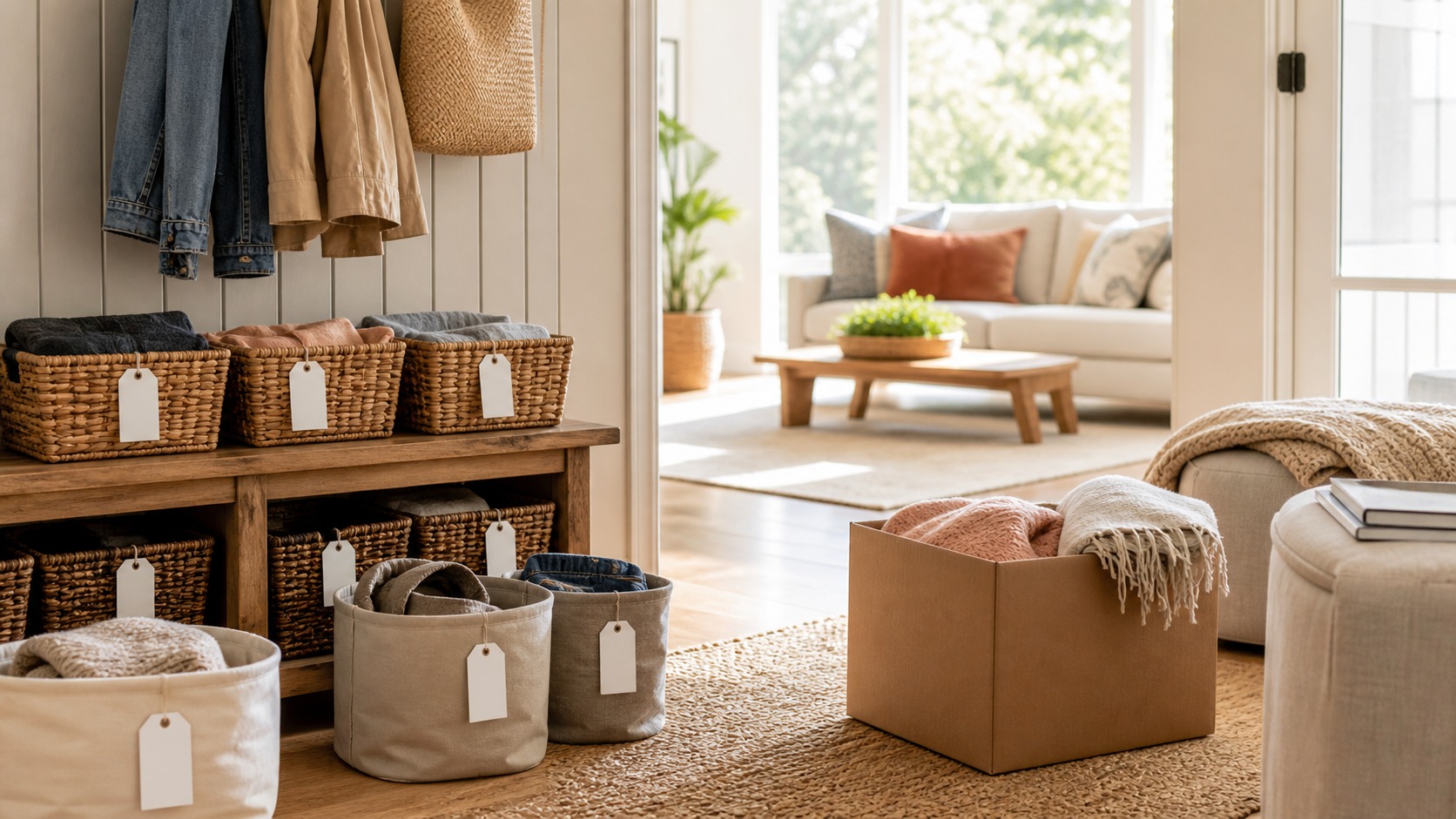
Create Homes for the Objects That Stay
Research-informed wellness advice becomes practical when it is translated into cues, recovery, environment, and feedback that a person can actually notice. The goal is not intensity; it is a pattern strong enough to survive interruptions, travel, low motivation, and the normal friction of a full life.
In practice, the strongest approach is patient and specific. It asks what happens before the behavior, what happens after it, and what makes the next repeat easier. Once the system is visible, improvement becomes less mysterious. You can adjust the cue, the timing, the environment, or the recovery window instead of blaming yourself.
This is also where self-trust grows. Each small completion gives the brain evidence that change is not a mood or a personality trait, but a repeatable process. For this article, the central angle is a fast-simplification lens that starts with visible clutter, so the recommendation is not to do more for its own sake, but to make the right next action easier to repeat.
Create Homes for the Objects That Stay matters because minimalism and decluttering is shaped by the ordinary conditions around a person, not by one dramatic burst of discipline. That keeps the plan humane. A useful routine should lower mental load, protect energy, and make tomorrow's choice slightly less complicated than today's.
Move Fast Without Making a Bigger Mess
In practice, the strongest approach is patient and specific. It asks what happens before the behavior, what happens after it, and what makes the next repeat easier. For this article, the central angle is a fast-simplification lens that starts with visible clutter, so the recommendation is not to do more for its own sake, but to make the right next action easier to repeat.
This is also where self-trust grows. Each small completion gives the brain evidence that change is not a mood or a personality trait, but a repeatable process. That keeps the plan humane. A useful routine should lower mental load, protect energy, and make tomorrow's choice slightly less complicated than today's.
Move Fast Without Making a Bigger Mess matters because minimalism and decluttering is shaped by the ordinary conditions around a person, not by one dramatic burst of discipline. The goal is not intensity; it is a pattern strong enough to survive interruptions, travel, low motivation, and the normal friction of a full life.
When people search for the ultimate minimalist decluttering guide: how to simplify your life fast, they are usually looking for a system that feels believable on a busy Tuesday, not a perfect plan for an imaginary week. Once the system is visible, improvement becomes less mysterious. You can adjust the cue, the timing, the environment, or the recovery window instead of blaming yourself.
Keep Simplicity From Becoming Another Project
This is also where self-trust grows. Each small completion gives the brain evidence that change is not a mood or a personality trait, but a repeatable process. The goal is not intensity; it is a pattern strong enough to survive interruptions, travel, low motivation, and the normal friction of a full life.
Keep Simplicity From Becoming Another Project matters because minimalism and decluttering is shaped by the ordinary conditions around a person, not by one dramatic burst of discipline. Once the system is visible, improvement becomes less mysterious. You can adjust the cue, the timing, the environment, or the recovery window instead of blaming yourself.
When people search for the ultimate minimalist decluttering guide: how to simplify your life fast, they are usually looking for a system that feels believable on a busy Tuesday, not a perfect plan for an imaginary week. For this article, the central angle is a fast-simplification lens that starts with visible clutter, so the recommendation is not to do more for its own sake, but to make the right next action easier to repeat.
The useful shift is to treat keep simplicity from becoming another project as design work: make the helpful choice visible, reduce the cost of starting, and leave room for real life. That keeps the plan humane. A useful routine should lower mental load, protect energy, and make tomorrow's choice slightly less complicated than today's.
Keep the Space Light After the Reset
The best version of the ultimate minimalist decluttering guide: how to simplify your life fast is not a rigid script. It is a living structure that helps you notice what supports you, what drains you, and what deserves to become easier. Start with one visible change, give it a clear place in the day, and review it with curiosity instead of judgment. Over time, minimalism and decluttering becomes less about chasing a flawless routine and more about building a life that repeatedly points you back toward health, attention, and steadier wellbeing.
A final practical note for sort by use, not by guilt is to make the next step visible before motivation fades. Place the object, reminder, or boundary where the choice will happen. Then remove one competing cue from that same space. This simple pairing makes the desired behavior feel less like a private promise and more like a normal part of the room, the schedule, and the rhythm of the day.
A final practical note for sort by use, not by guilt is to make the next step visible before motivation fades. Place the object, reminder, or boundary where the choice will happen. Then remove one competing cue from that same space. This simple pairing makes the desired behavior feel less like a private promise and more like a normal part of the room, the schedule, and the rhythm of the day.
A final practical note for sort by use, not by guilt is to make the next step visible before motivation fades. Place the object, reminder, or boundary where the choice will happen. Then remove one competing cue from that same space. This simple pairing makes the desired behavior feel less like a private promise and more like a normal part of the room, the schedule, and the rhythm of the day.
A final practical note for sort by use, not by guilt is to make the next step visible before motivation fades. Place the object, reminder, or boundary where the choice will happen. Then remove one competing cue from that same space. This simple pairing makes the desired behavior feel less like a private promise and more like a normal part of the room, the schedule, and the rhythm of the day.